So, here we go again, plastic pollution, who doesn’t know that we, humans dump lots and lots of plastic waste into the ocean every single year. In 1975, the National Academy of Sciences estimated that 14 billion pounds of garbage was being dumped into the ocean every year. That’s more than 1.5 million pounds per hour.
Effects of Plastic on Marine Life

Some marine life such as the sea turtles may be fooled as they thought that the plastics are somekind of foods and ate it, they would think that they have ate enough because their stomach is full, they would later die starving to death because of it, some of them may become entangled and could not breathe, turtles usually streches its neck above the water to breathe but they would have died because they would have died because they could not stretch their neck above the water to breathe, this shows that plastic wastes and old fishing gears that is thrown into the ocean posses a major threat to large marine animals such as turtles
Anyone who’s been on a boat far from the sight of land will tell you how enormous the ocean feels. Wouldn’t this debris simply get dispersed, virtually eliminating the possibility of an encounter with a marine animal? The answer is no. While the ocean does disperse the trash, it also runs in currents, which can keep the floating trash traveling constantly in “gyres,” concentrating it in areas where currents meet. The largest of these movements, is called the central gyre. It moves in a clockwise circular pattern, moving inside the Gulf Stream, and dominates the western North Atlantic. Studies begun in 1984 have tracked how these currents keep plastics migrating, with heavy concentrations in the northern Sargasso Sea (coincidentally, a favorite spawning place for fish). The Northeast United States, “upstream” of the central gyre, has currents that keep most of the locally generated marine debris local. Usually the only ways to escape this constant circular pattern is if the plastic decays enough to sink, or lands onshore to be (hopefully) picked up by a passer-by.
And apparently, the ocean isn’t large enough to avoid marine life encounters with debris. Plastic’s devastating effect on marine mammals was first observed in the late 1970s, when scientists from the National Marine Mammal Laboratory concluded that plastic entanglement was killing up to 40,000 seals a year. Annually, this amounted to a four to six percent drop in seal population beginning in 1976. In 30 years, a 50% decline in Northern Fur Seals has been reported.
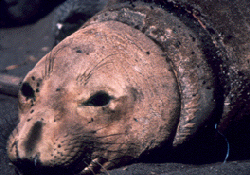 These curious, playful seals would often play with fragments of plastic netting or packing straps, catching their necks in the webbing. The plastic harness can constrict the seal’s movements, killing the seal through starvation, exhaustion, or infection from deep wounds caused by the tightening material. While diving for food, both seals and whales can get caught in translucent nets and drown. In the fall of 1982, a humpback whale tangled in 50 to 100 feet of net washed up on a Cape Cod beach. It was starving and its ribs were showing. It died within a couple of hours.
Along Florida’s coasts, brown pelicans diving for fish sometimes dive for the bait on a fisherman’s line. Cutting the bird loose only makes the problem worse, as the pelican gets its wings and feet tangled in the line, or gets snagged onto a tree.
Plastic soda rings, “baggies,” styrofoam particles and plastic pellets are often mistaken by sea turtles as authentic food. Clogging their intestines, and missing out on vital nutrients, the turtles starve to death. Seabirds undergo a similar ordeal, mistaking the pellets for fish eggs, small crab and other prey, sometimes even feeding the pellets to their young. Despite the fact that only 0.05% of plastic pieces from surface waters are pellets, they comprise about 70% of the plastic eaten by seabirds. These small plastic particles have been found in the stomachs of 63 of the world’s approximately 250 species of seabirds.
Wildlife is not the only area to suffer from the effects of marine debris. Plastic bags are the leading external cause of marine engine damage in Massachusetts. Other plastic items foul propellers and interfere with fishing tackle.
Problem of Plastic Pollution
Plastic has been slowly accumulating in the marine environment since the 1960s, to the point that we now have huge masses of plastic floating in the oceans and other waste plastics washing up on the once beautifully clean beaches around the world. Its estimated that there are 1 million pieces of plastic of varying size per square mile, with a further 8 million tonnes of plastic entering the oceans per year.
Much of it is single-use plastics so food packaging and bottles, carrier bags and other such products. Approximately 500 billion plastic bags are used worldwide per year – that’s over 1 million a minute, but this is perhaps unsurprising when the average working life of a carrier bag is considered 15 minutes!
However, its not just large pieces of plastic that are causing havoc with the marine environment. Household and cosmetic products are laced with microplastics designed to scrub and clean, and which are too small to be caught by water filtration systems. The microplastics enter water every time someone brushes their teeth or scrubs their face with products containing them.
These microplastics, along with nurdles – lentil sized pieces of plastic which are a by-product of various manufacturing products that end up in the oceans as a result of mis-handling or accidental spills – can be ingested by ocean wildlife and accumulate up the food chain, even reaching humans. It is also hypothesised that these smaller pieces of plastic can attract toxic chemicals released by industry and agriculture decades ago, the concentration of which also increases up the food chain.
Plastic is cheap and versatile, making it ideal for many applications, but many of its useful qualities have led to it becoming an environmental problem. The human population has developed a disposable lifestyle: it is estimated that 50% of plastics are used once before being thrown away. Plastic is a valuable resource but polluting the planet with it is unnecessary and unsustainable.
What’s being done about plastics
In 1987, a law was finally passed restricting the dumping of plastics into the ocean. The Marine Plastic Pollution Research and Control Act (MARPOL) went into effect on December 31, 1988, making it illegal for any U.S. vessel or land-based operation to dispose of plastics at sea. It is part of an international treaty, where countries representing at least half of the shipping fleet tonnage in the world agreed to Annex V of the treaty, preventing “pollution by garbage from ships.” It prohibits the dumping of plastics anywhere in the ocean, and the dumping of other materials, such as paper, glass, metal, and crockery, closer to shore.
The plastics industry has also stepped in, taking measures to reclaim plastic resin pellets that often get lost during production or transport. The Society of the Plastic Industry has produced many public service ads for trade magazines, and was a strong supporter of MARPOL Annex V.
Plastics manufacturers are also investigating ways to create “degradable” plastics. Although all materials eventually break down, a plastic soda ring can take up to 400 years to biodegrade. So researchers are working with two types of degradable plastics: photodegradable and biodegradable.
Photodegradable plastics are made to become weak and brittle when exposed to sunlight for prolonged periods. At least 16 states–Massachusetts, New York and Rhode Island included–have passed laws requiring six-pack holders be biodegradable (these are marked by a small diamond between the rings).
Biodegradable plastics are made with cornstarch, so bacteria and other organisms eat away at the plastic, breaking it up into smaller pieces. Neither of these methods, however, solve the problem of plastic in the oceans, since they are only broken up into smaller pieces–creating an even more dangerous situation for animals that mistake smaller plastic pieces for food.
Perhaps the most effective method right now for solving the persistent plastic problem is beach cleaning. Coastal cleanups gather volunteers to collect trash that has washed up on the beach–or has been left by beachgoers to be carried out by the surf–and removed it from the marine cycle.
The Center for Marine Conservation has been coordinating coastal cleanups since 1986. (The first nationwide cleanup took place in 1988, just four months before the MARPOL treaty took effect. Canada and Mexico joined in on the act in 1989.) The CMC also keeps careful track of all the debris that is collected. Data cards list 85 debris items in eight categories: plastic, styrofoam, glass, rubber, metal, paper, wood and cloth. During the 1993 coastal cleanup, over 3.1 million pounds of trash was collected–more than half of that was plastic.
The CMC also divides their data into debris found, listing the “dirty dozen”–twelve items found most frequently:
-
- 1) cigarette butts
-
- 2) paper pieces
-
- 3) plastic pieces
-
- 4) styrofoam
-
- 5) glass pieces
-
- 6) plastic food bags
-
- 7) plastic caps and lids
-
- 8) metal beverage cans
-
- 9) plastic straws
-
- 10) glass beverage bottles
-
- 11) plastic beverage bottles
- 12) styrofoam cups
Debris that can be traced to recreational fishing and boating, galley-type wastes, and cruise ship debris all declined in 1993–perhaps a glimmer of hope resulting from the MARPOL treaty. The laws, enforced by the Coast Guard in the United States, are difficult to monitor. Instead, they rely heavily on an educational campaign, bringing about “voluntary compliance through awareness.”
There is still much debris floating around our seas and endangering marine animals. But as more laws are passed, and as more people become involved in projects like beach clean-ups, perhaps the only plastic will be in our supermarkets.
What you can do
Reduce your everyday waste
Cleanaway Waste Management says the easiest step you can take to reduce your everyday waste is to eliminate single-use plastic.
That includes things like plastic bags, straws and water bottles, which are some of the most common waste collected in the environment.
Here are a few ways you can go about reducing your plastic consumption:
- Say ‘no’ to plastic shopping bags. In fact, every state in Australia — except NSW — has now banned or promised to ban lightweight plastic bags. Woolworths and Coles have also announced plans to phase it out
- Forgo plastic straws
- Buy fewer products. For example, the Government’s Your Energy Savings campaign says the same cleaner can be used on your mirrors, tiles and shower recess. Same with cosmetic, skin and hair care items — many of which end up in our waterways, and as landfill
- Purchase a long-life reusable drink bottle or keep cup and keep them in your bag or at work
Try buying in bulk
Confused on how this helps?
Well, it turns out all those single-serve yoghurts, individual packs of washing powder and chocolate wrappers use up quite a bit of packaging.
By buying in bulk you’re using less packaging. And it also saves you money at the checkout.
However, it’s important to point out you should use your common sense with this.
Only buy in bulk if you know you are going to use the product — like toilet paper or laundry powder. There’s no point buying a 1 litre tub of yoghurt if you don’t eat it that often — that will just end up as food waste.
Limit your use of chemicals
Basically, what goes down our drains ends up in our waterways and in the ocean.

That includes harmful chemicals, such as phosphates, which can cause algal blooms.
Instead, Your Energy Savings recommends cutting back on the chemicals and using an organic alternative. These include:
- Baking soda cleans, deodorises, softens water and is a good scouring powder for everything from silverware to sinks
- Lemon juice is a mild bleach, deodoriser and cleaning agent
- White vinegar cuts through everything from tarnish to grease, and it’s a deodoriser and mild disinfectant. It’s also great for cleaning mirrors and windows. Mix half and half with water, and keep it in a labelled spray bottle
- Washing soda cuts grease and removes stains
And if you do need to buy specialist cleaning products, consider buying those that are plant-based and biodegradable:
- Use dishwasher detergents that are free of chlorine bleach and lowest in phosphates
- Use bathroom cleaners that are free of aerosol propellants and antibacterial agents
For more tips on green cleaning check out the NSW Office of Environment and Heritage website.
Reuse items or try buying second-hand
Before buying new clothes, technology or furniture, consider whether you really need it.
In many cases, you probably don’t. But for those times that you do, consider getting it second hand.
Australians are the world’s second largest consumers of textiles but only about 15 per cent of clothes donated to charity are resold within Australia.
The rest are sold as industrial rags, sent to landfill, or sent overseas to developing nations.
And in many cases, these clothes can take hundreds of years to break down.
For example, clothing made from polyester, which is essentially a plastic, takes up to 200 years to breakdown in landfill.
By choosing reused or recycled products, you’re helping to create a market for used goods and supporting the recycling industry.
Know how to recycle
A lot of people are still confused about what they can and can’t recycle.
And China’s recent crackdown on the standard of waste it will import means it’s more important than ever to know what can and can’t be recycled.
Recently, the ABC looked at whether people could recycle pizza boxes and many were surprised to find out that “a lot of councils are saying no to pizza boxes”.
And this can be a problem because the wrong item can “contaminate” a recycling bin and reduce the value of your recycling.
If there’s too much contamination, you risk sending a truck full of recyclables to landfill.
Participate in a beach clean-up or do it yourself
Marine Conservation says people should, “just remember the Scab Duty maxim — see it, bin it, everyday”.
It might not seem like much but every little bit counts — even making sure to throw your rubbish away in a trash can or bring a bag with you.
What else can you do:
- Look out for rubbish on streets, footpaths, parking lots and storm drains — they can empty into our oceans and waterways
- You’re also encouraged to report instances of illegal dumping to your local council
- Get involved with your community or participate in an organised clean-up event near you

 Explore The World